Sleep Hygiene: The Bedtime Ritual Your Body’s Been Begging For
If you’ve ever laid awake at 2 a.m. staring at the ceiling, wondering why your brain decided now was the perfect time to replay every awkward thing you’ve ever said since 2004, welcome to the club. Sleep problems are one of the most common complaints I hear — right after neck tension and “I hold my stress in my shoulders.” (Spoiler: those two things are related.)
We live in a world that glorifies being busy, caffeinated, and half-exhausted. But your body doesn’t care about hustle culture. It cares about recovery. And sleep is the number one way your body hits the “reset” button.
What Is Sleep Hygiene?
Sleep hygiene isn’t about white sheets and lavender candles (though those help). It’s the collection of habits, routines, and environmental cues that tell your body, “Hey, it’s time to shut it down.” Think of it as training your nervous system to recognize bedtime the same way Pavlov’s dogs recognized the dinner bell.
The Big Sleep Killers
Let’s call out the usual suspects:
Caffeine after noon. Yeah, I know. “But I can drink coffee and fall asleep just fine.” Sure, but your sleep quality is garbage. Deep sleep takes the hit.
Screen time before bed. Blue light blocks melatonin. Your phone is basically a tiny insomnia machine.
Inconsistent bedtime. Your body craves rhythm. Going to bed at 10 p.m. one night and 1 a.m. the next confuses your internal clock more than daylight savings time ever could.
Stress. If your brain won’t shut up, your body won’t either. Chronic tension and poor sleep feed each other in a vicious loop.
The Posture Problem: When Sleep Becomes a Wrestling Match
Sleep should be the easiest thing we do all day — yet for so many (myself included), it’s not. People jack themselves up while asleep by twisting the spine, compressing nerves, shortening already tight muscles, and overstretching muscles that are already overstretched. You go to bed thinking you’ll wake up refreshed — and instead, you wake up realizing you can’t look to the left.
A neutral sleeping position is the goal. That means keeping your spine in natural alignment so muscles can actually rest. And if you’re one of those people with 42 decorative pillows — just know that the more pillows you add, the worse you’ll sleep. It’s like a math equation from hell: the prettier your bed looks, the less rest you get.
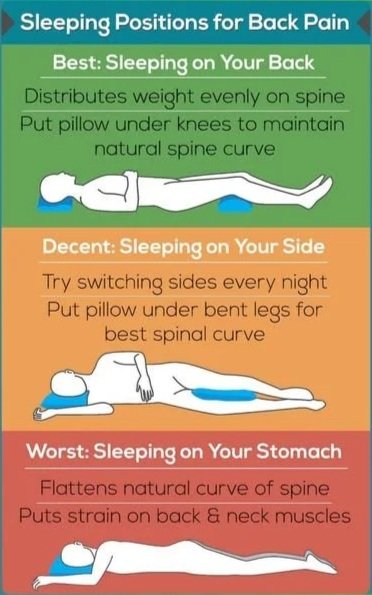
Best Sleep Position: Back — Hands Down
I know, I know... everyone says, “But I can’t sleep on my back!” The trick is: don’t lie there like you’re in a coffin. Give your body some support. Place a pillow or bolster under your knees to take pressure off your lower back, and use a small, supportive pillow under the curve of your neck. Even a small C-shaped travel pillow works wonders — just lay it flat on the bed and turn it so the opening is at the top of your head. Your head should be touching, or almost touching, the mattress. This setup keeps your cervical spine supported without jamming your chin to your chest or pushing your head forward — two of the biggest culprits behind morning neck pain and headaches.
Runner-Up: Side
If you’re a side sleeper, hug a pillow between your knees to keep your hips stacked and your spine aligned. Choose a pillow that fills the space between your shoulder and head so your neck isn’t sagging or cranked upward. Your goal is comfort and alignment — no pretzel shapes allowed.
Last Place: Stomach
And if you sleep on your stomach… stop. Just don’t. It’s like spending eight hours in a slow-motion chiropractic adjustment gone wrong.
How to Fix the Rest
Let’s talk about habits that actually help:
Pick a bedtime and stick to it. Yes, even on weekends. Aim for within 30 minutes of the same time nightly.
Dim the lights an hour before bed. Your body needs darkness to make melatonin.
Make your bedroom a cave. Cool, dark, quiet. Blackout curtains, white noise, and a temperature around 65–68°F are ideal.
Do something relaxing — not productive. Stretch, read, meditate, breathe. And no, doom-scrolling doesn’t count.
Get morning sunlight. Ten minutes of natural light early in the day helps your circadian rhythm know when to power up and when to wind down.
Massage, Red Light Therapy & Essential Oils: The Dream Team for Better Sleep
At Health & Harmony, we’re all about helping your body get back to its natural rhythm. Regular massage reduces cortisol (your stress hormone) and boosts serotonin and dopamine — which your body then converts into melatonin, the hormone that helps you sleep deeply and stay asleep. Combine that with red light therapy, and you’re stacking the deck: red light supports cellular repair, reduces inflammation, and helps balance your circadian rhythm. Translation? You fall asleep faster, stay asleep longer, and wake up feeling human again.
For an easy, natural bedtime cue, try our Harmony Naturals Sweet Dreams blend — a calming mix of lavender, marjoram, patchouli, and bergamot designed to help you unwind and let go of the day. Diffuse it beside your bed, mix a few drops into water for a linen spray, or blend with your favorite unscented cream to make a nighttime body moisturizer. It’s simple, natural, and a beautiful way to signal your body that it’s time to rest.
Massage. Red light. Sweet Dreams. That’s the trifecta for deep, restorative rest. (And hey — we’re open until 8:00 p.m., so you can roll right from your massage to your pillow.)
Bottom Line
Sleep isn’t a luxury — it’s maintenance. You wouldn’t drive your car 100,000 miles without an oil change, so don’t expect your body to run well without rest. Learn how to set yourself up for good sleep hygiene and proper sleep posture. Because waking up pain-free shouldn’t be a rare event — it should be your normal.
~Kim