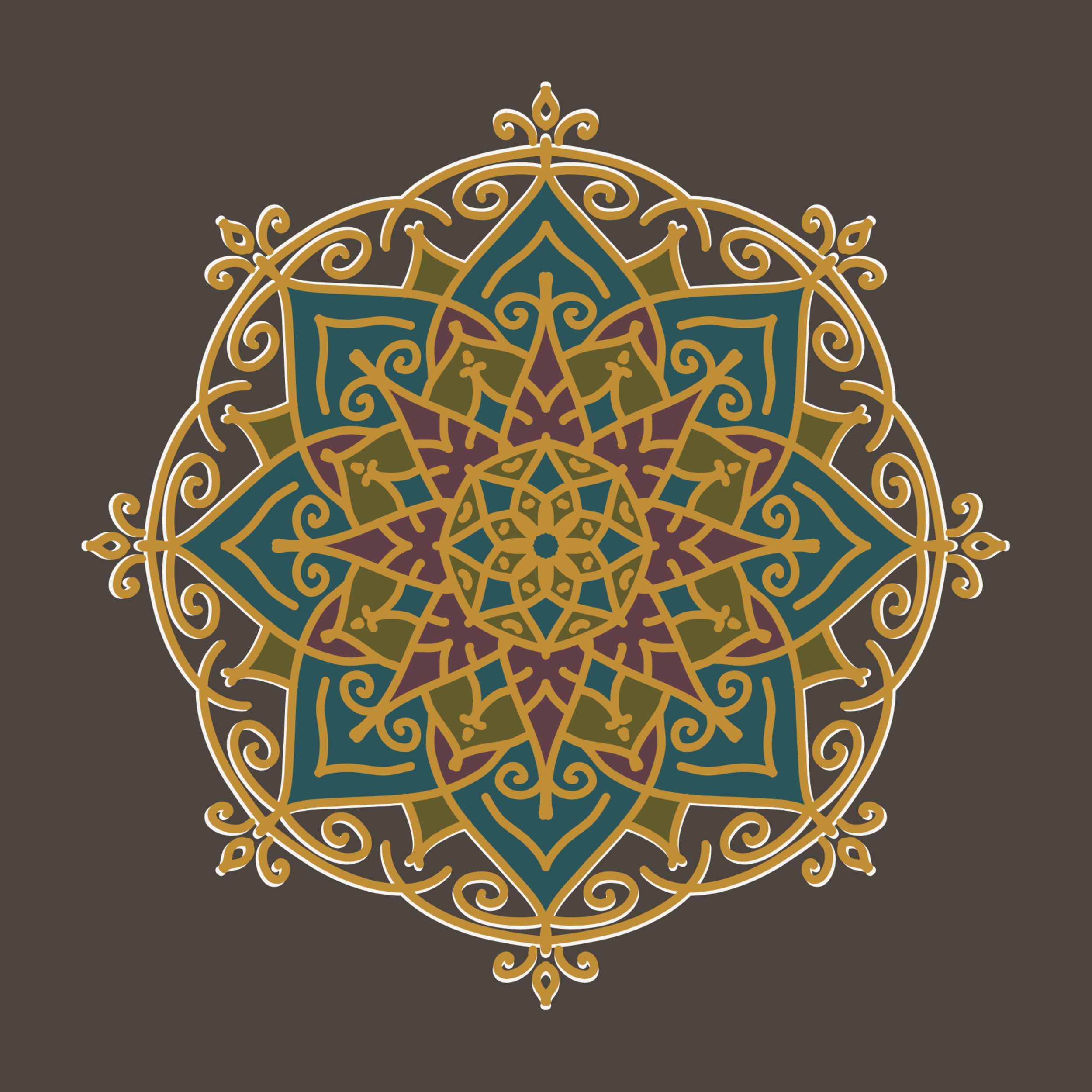
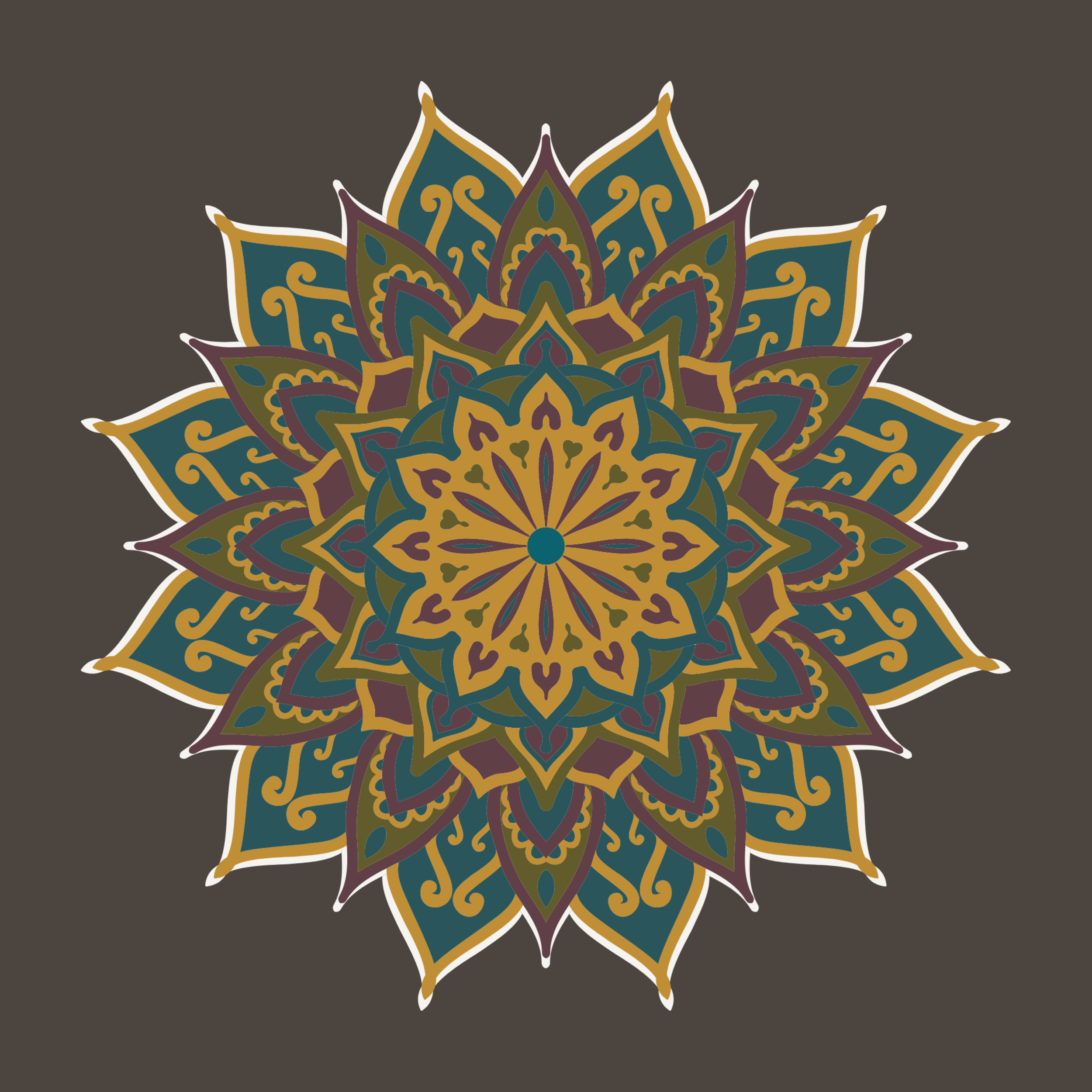
The mandala isn't just our logo. There are dozens of them here — in all seven treatment rooms, the lobby, the Zen Den, the red light room, and the length of both fifty-foot hallways. The whole office. None of it is an accident, and none of it is just decoration.
We didn't reach for standard massage office décor. Plenty of places like ours settle for cool gray palettes and whatever pleasant-looking (though potentially meaningless) framed print fills up wall space. We went the other way, on purpose: an inviting Mediterranean palette to represent vitality and the mandalas to represent balance.
The mandala speaks to me in both its beauty and its representation of symmetry — every part in proportion, the weight carried equally around a still center, no piece heavier than another. For thousands of years, in cultures the world over, it's stood for balance: a whole where every part holds its share. We put our mandalas everywhere not because they're pretty, but because they represent a body in good working order — balanced and symmetrical, even side to side and front to back, the load of the body shared equally, no one part left carrying all of it.
Most of the pain we see here isn't random. It's a body out of balance — muscles pulled the same way for so long that they can't quite find their way back to where they are supposed to be on their own. When that happens, it tends to show up in familiar ways:
Pain in the usual places — low back, shoulders, neck — including the headaches that so often begin with a tight, dysfunctional neck.
Joints that ache because of dysfunctional movement — especially knees, hips, and shoulders.
Posture that drifts — a rounded back, a forward head, one shoulder riding higher than the other.
Stiffness and shrinking range of motion when imbalanced muscles won't let a joint move the way it should.
The cost underneath all of it: a body working against itself wears down faster than it should — bringing with it degenerative changes and injuries as well as constantly sore and weary muscles.
That's what the work is really for: helping a body come back into balance. Not just chasing down "where it hurts" but actually chasing down the source of the imbalance and correcting it. But balance isn't only about muscles. Too much or too little of anything will wear you down. Too much strain, too little recovery. Too much sitting, too little moving. Too much noise, too little quiet. The body and the life it belongs to obey the same rule — equilibrium is where well-being lives, and the loss of it is where suffering starts.
So look at the mandala again — really look. Every part in its place, none of it crowding or straining against the rest, the whole thing balanced around that still center. That's not just a pattern. That's a body working with itself instead of against itself. That's the harmony in our name.
It was never just decoration. The whole place is a picture of exactly what we do.